
Some of my favourite films from last year – Whiplash, Tu Dors Nicole – were first screened at the 2014 Directors’ Fortnight (or Quinzaine des Réalisateurs, as my francophile self undoubtedly prefers), so it’s no wonder that I was especially looking forward to this year’s edition. As things go, I only managed to see one film – only one! – , but I’m so glad that it was Arnaud Desplechin’s latest, My Golden Years.
Described as a prequel to his 1996 My Sex Life…Or How I Got Into An Argument, the drama takes the form described in its original title, Trois Souvenirs de Ma Jeunesse (literally “three memories from my youth”). Mathieu Amalric, a regular with Desplechin, reprises his role as Paul Dedalus, but largely leaves the scene to Quentin Dolmaire, who plays his younger incarnation.

The film starts with Paul’s return to France after many years spent in Tajikistan. Stopped at the border because of an issue with his documents, he is held for questioning, which triggers his memories. He remembers moving in with his great aunt after some awful fights with his mother, and that’s the first chapter. He remembers his adventurous trip to Moscow with his then best friend, and the muted melancholy with which Paul recalls a friendship that has since dissolved is possibly one of the most delicate and moving moments in My Golden Years. More than anything though, he remembers Esther, the third and longest memory in this bittersweet drama.
As beautiful as she is insolent, Esther is so totally out of Paul’s reach that it’s only natural to see them ending up together. Watching their long-distance relationship, romantically sustained by countless letters, brief phone calls and monthly visits, is heart-wrenching, and we truly feel for the couple as they go through ups and downs, separations, crises and the occasional infidelities.

For a film so imbued in melancholy, My Golden Years is surprisingly funny. Esther’s cutting disdain for the other girls is as pungent as it is funny, and the hilarious skirt-dropping scene has quickly become one of the most talked about moments in the film. Paul’s younger brother’s peculiar take on religion is also a constant source of laughter.
My Golden Years is aided by a lively soundtrack and a vivid cinematography, which stop it (and us) from wallowing in nostalgia. On the contrary, the saturated colours, warm light and soft focus that pervades many of its scenes suggest the serenity that only comes once time has glossed over memories, hiding the most painful bits away.

The result is a poetic film about what could have been and what has been instead. Paul Dedalus acknowledges that his best days may be behind him, but seems to be at peace with that, choosing to savour those beautiful memories instead of giving in to self-pity. An almost cathartic journey that will make you smile as you wipe a tiny tear from your eye, it goes to Desplechin’s credit that he manages to achieve that without the slightest attempt at manipulating his audience. I might have not seen the other films in competition, but I know who I’m rooting for tonight. Bravo, et bonne chance.



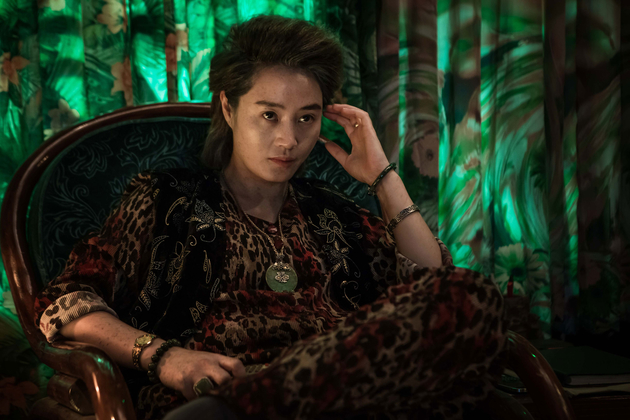
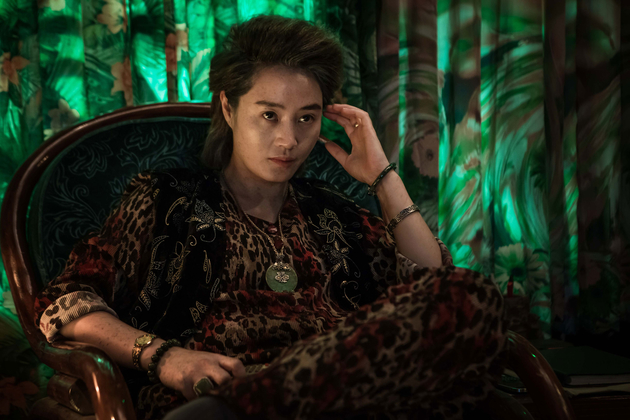


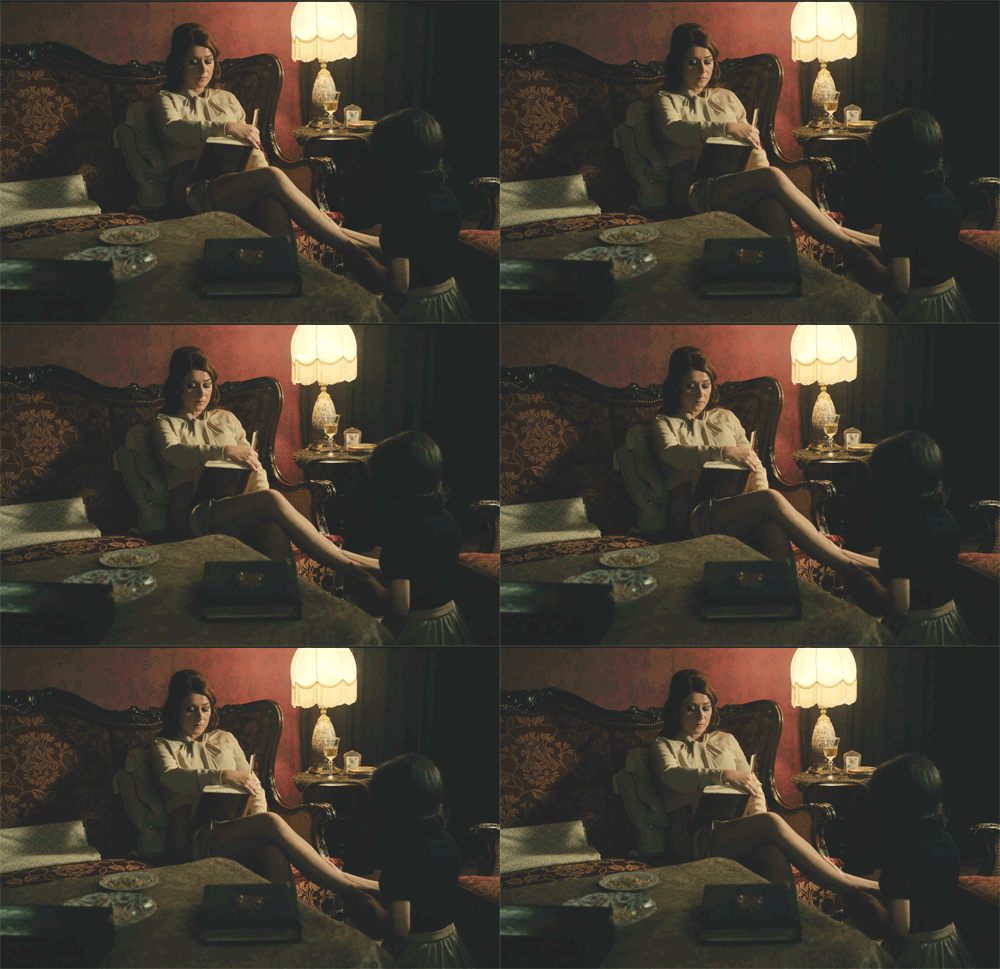
 Once at the cinema, the film seemed to deliver, starting from the meticulously curated opening titles, which go as far as to feature the fictional perfumes worn by the actors. The twist in the plot came twenty minutes in [spoiler alert!]: we find out that Cynthia is adopting the dom role to please her younger lover Evelyn, a natural-born sub. Her ice-cold allure and inflexible ways are revealed to be a carefully rehearsed act, for Cynthia is following cues penned by Evelyn herself. “Fantastic – I couldn’t help but think – finally a film that acknowledges the power relation between dom and sub, showing that it is the latter, with her license to stop everything by mentioning the safe word, who calls the shots in the relationship”. And indeed, Evelyn is the one in control, imagining scenarios and buying Cynthia outfits in order to fulfill her fantasies. Such premise is fascinating, and for the first half hour, everything is perfect: the deceitful first impression, the chemistry between the characters, the remote universe in which the events take place, a land seemingly populated only by women, all scholars in entomology. These are matched by a sensuous cinematography, which supports the plot in full by studiously lingering over the shiny silk of undergarments, the delicate soap bubbles, the brocade drapes that ask for fingers to be run through them, the creaky, stiff feel of leather and the way it moulds to the skin.

 Pearls and Pigs